Description
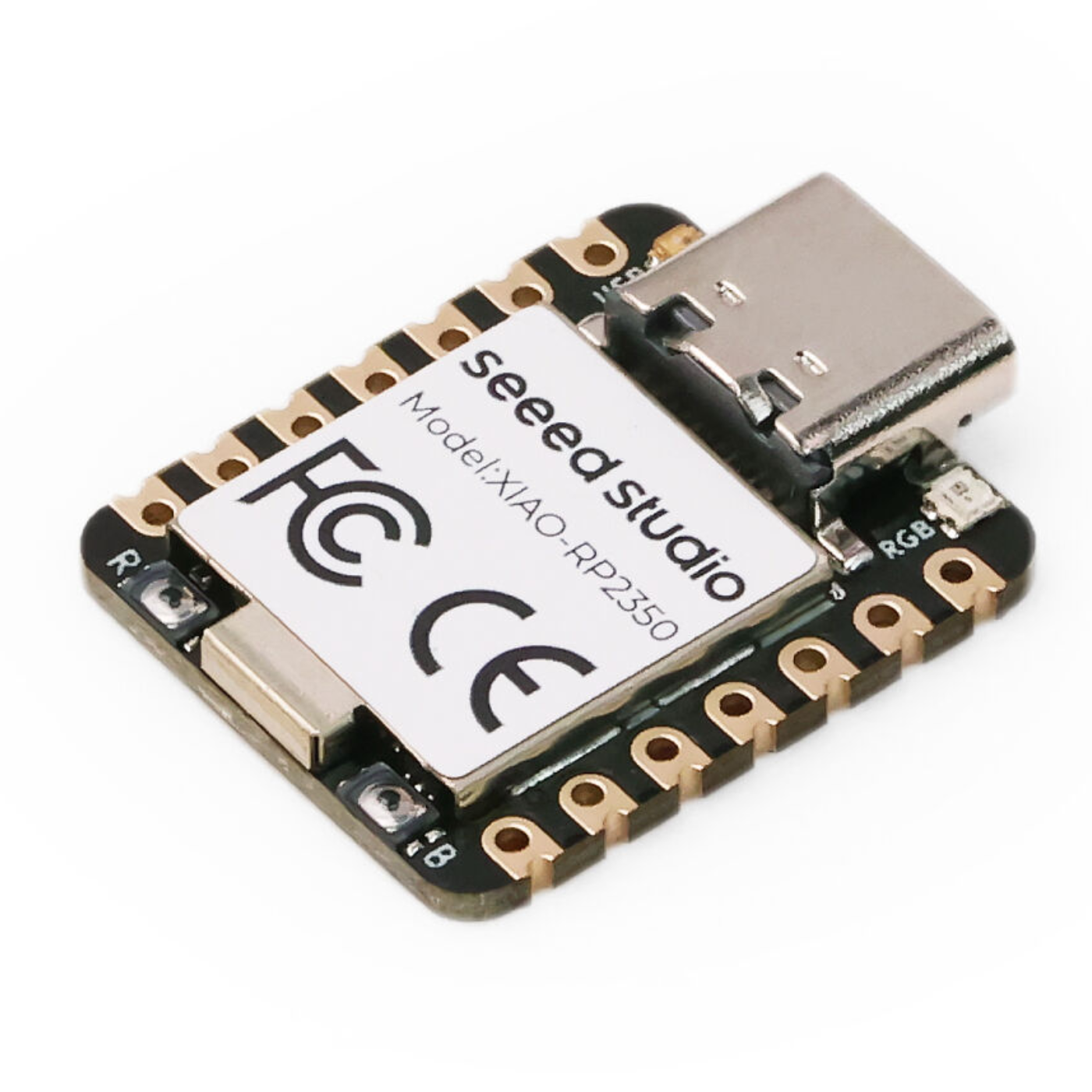
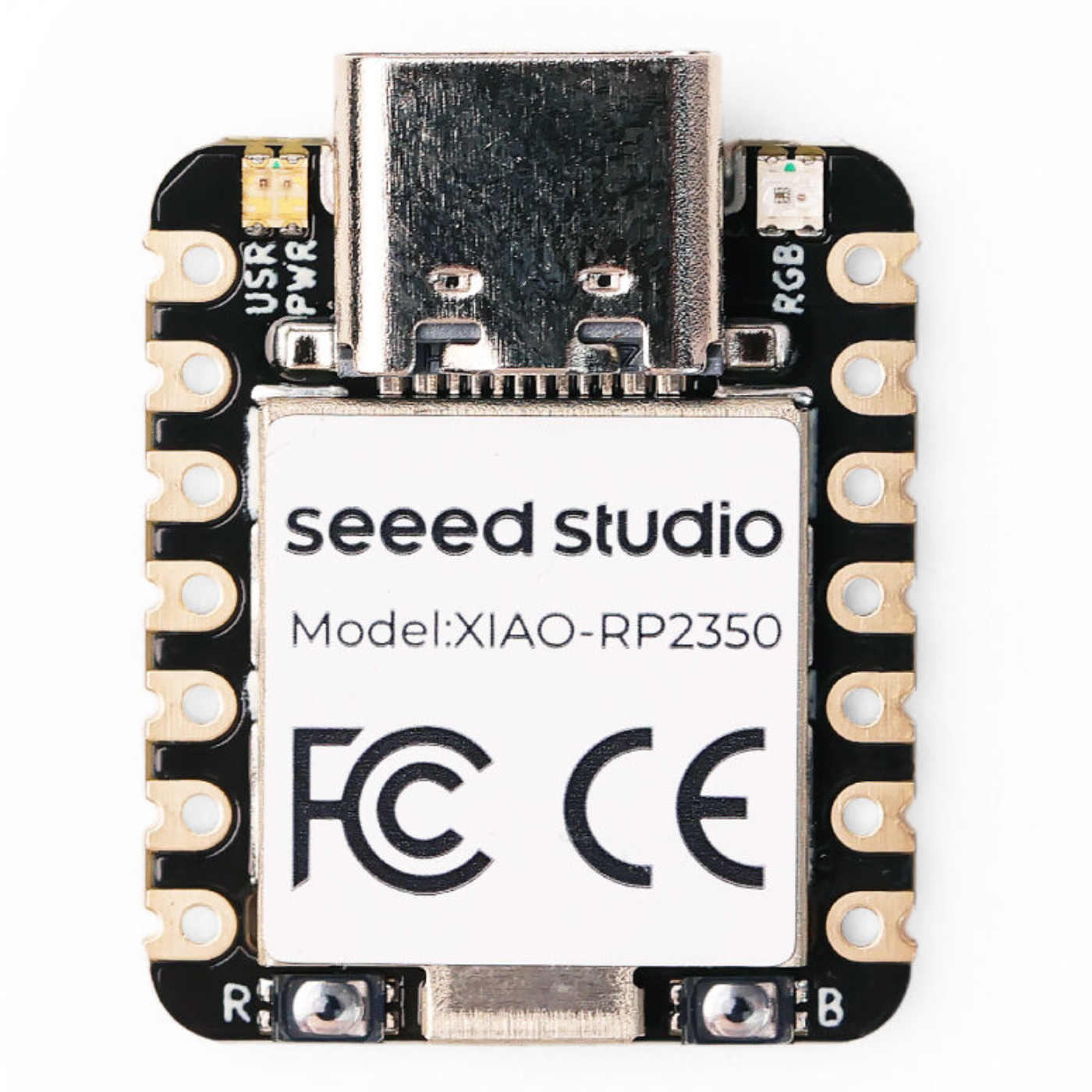
Seeed Studio XIAO RP2350 Development Board
The Seeed Studio XIAO RP2350 is a powerful and compact development board designed for a wide range of embedded applications.
It integrates the Raspberry Pi RP2350 processor, featuring dual Arm Cortex-M33 cores running at 150 MHz and dual open-hardware RISC-V cores, offering enhanced performance, security, and encryption capabilities.
With support for MicroPython, C, and C++, developers can easily create versatile, battery-powered projects such as smart controls, wearables, and DIY keyboards.
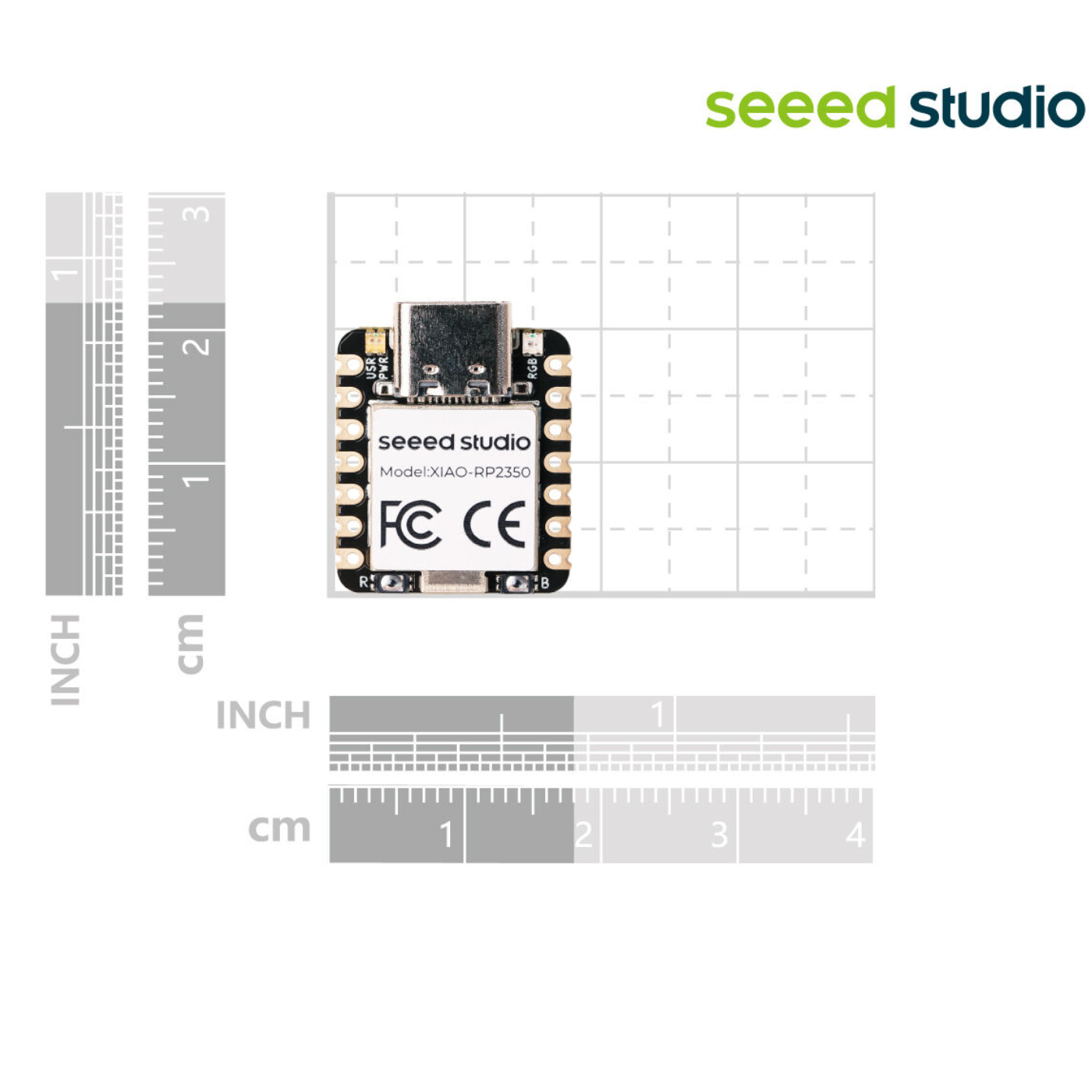
Measuring only 21×17.8 mm, the board includes 19 multifunction GPIOs, an RGB LED, and a Battery Management System with ultra-low power consumption of just 27μA.
Thanks to the XIAO ecosystem, the XIAO RP2350 seamlessly supports various add-ons, including displays, LED matrices, Grove modules, CAN Bus, Vision AI sensors, and mmWave sensors, making it a perfect choice for efficient and compact embedded system development.
Compatible Accessories
Features:
- Powerful MCU Board: The Raspberry Pi RP2350 processor has dual-core, dual-architecture capabilities, allowing developers to choose between two industry-standard Arm Cortex-M33 cores @ 150MHz with FPU and two open-hardware Hazard3 RISC-V cores.
- Enhanced Security Features: The built-in secure boot and encrypted bootloader provide application security.
- Software Support: Compatible with C/C++ and MicroPython, allowing for easy project development and prototyping.
- Rich Onboard Resources: Includes an RGB LED, 2MB Flash, 520kB SRAM, and 19 multifunction GPIOs (Analog, Digital, I²C, UART, SPI, PWM).
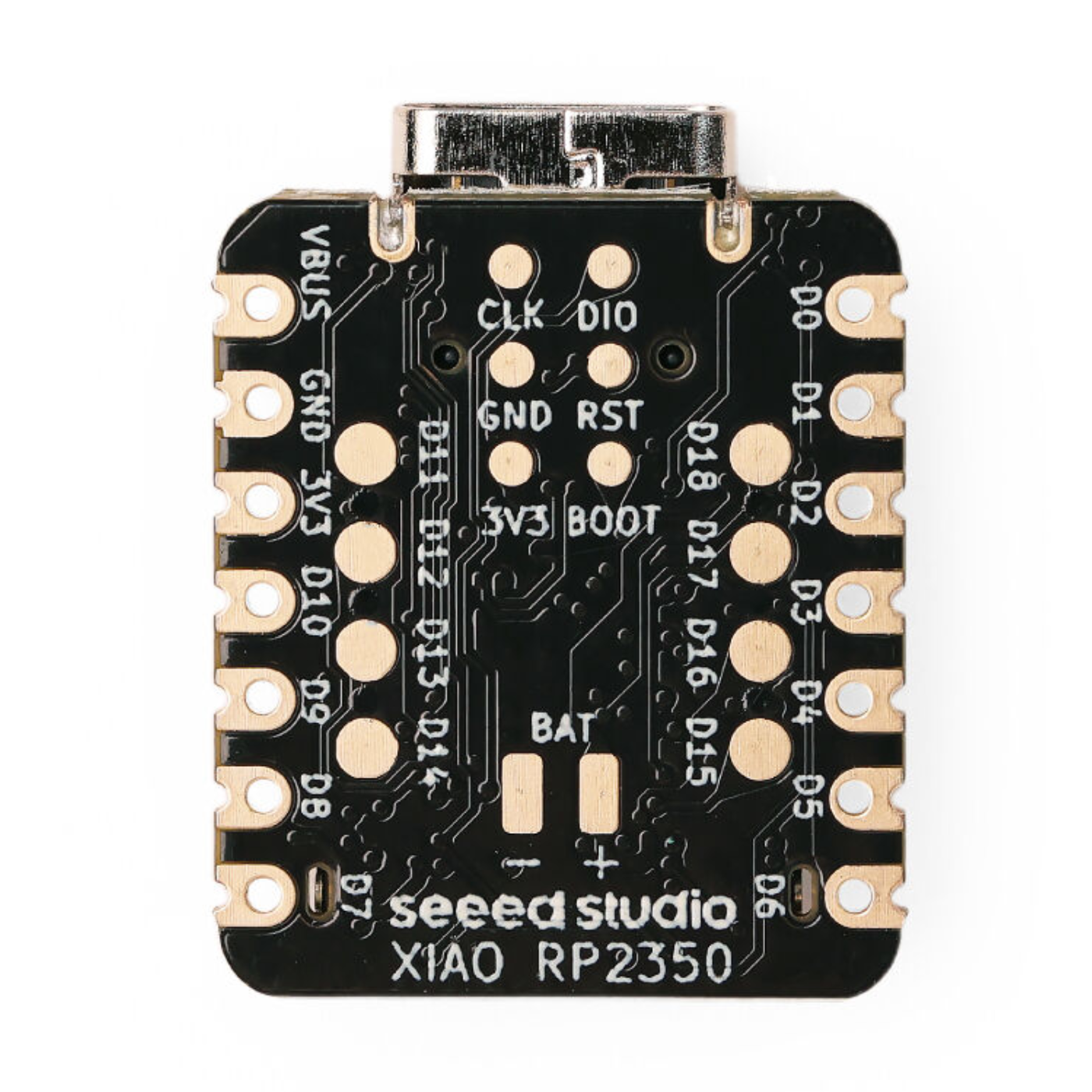
- Expanded 8 New IOs: Compared to prior XIAO MCUs, the addition of 8 IO pins on the back allows for more complicated applications.
- Efficient Power Design: In sleep mode, the device consumes only 27μA, making it suitable for battery power supply. Direct battery voltage measurement via internal I/O improves the battery management system (BMS).
- Compact, thumb-sized design: It is 21 x 17.8mm and uses Seeed Studio’s iconic XIAO form factor, making it excellent for space-conscious applications.
- Production-friendly: Surface Mount Device (SMD) design features all components on the front and stamp holes on both sides, allowing for efficient mass manufacture.
RP2040 vs RP2350 — Comparison Chart
| Specification / Feature | XIAO RP2040 | XIAO RP2350 |
|---|---|---|
| Processor | Dual-core ARM Cortex-M0+ @ up to 133 MHz | Dual-core ARM Cortex-M33 @ 150 MHz with FPU (and optional RISC-V cores support) |
| SRAM | 264 KB | 520 KB |
| Flash / Storage | 2 MB onboard flash | 2 MB onboard flash (plus external QSPI flash/PSRAM support) |
| GPIO / I/O | ~11 digital + 4 analog + support for I²C, SPI, UART, PWM | 19 digital pins, 3 analog, 2× I²C, 2× UART, 2× SPI, all PWM expanded I/O capability |
| On-board LEDs / Indicators | User LED (multi-color), power LED, RGB LED | User LED, charge/power LED, RGB LED |
| Power & Low-Power Mode | Standard USB power (no special low-power mention) | Ultra-low power consumption (sleep mode ≈ 27 µA), battery-ready with BMS features |
| Security Features | None specified | Secure boot, encrypted bootloader, Arm TrustZone, OTP security features |
| Best Suited For | Basic IoT, simple sensors, small-scale projects, educational use | More complex applications — battery-powered IoT, secure/control applications, wearable, robotics, multi-sensor systems |
Hardware Overview:
Pinout Diagram of XIAO RP2350
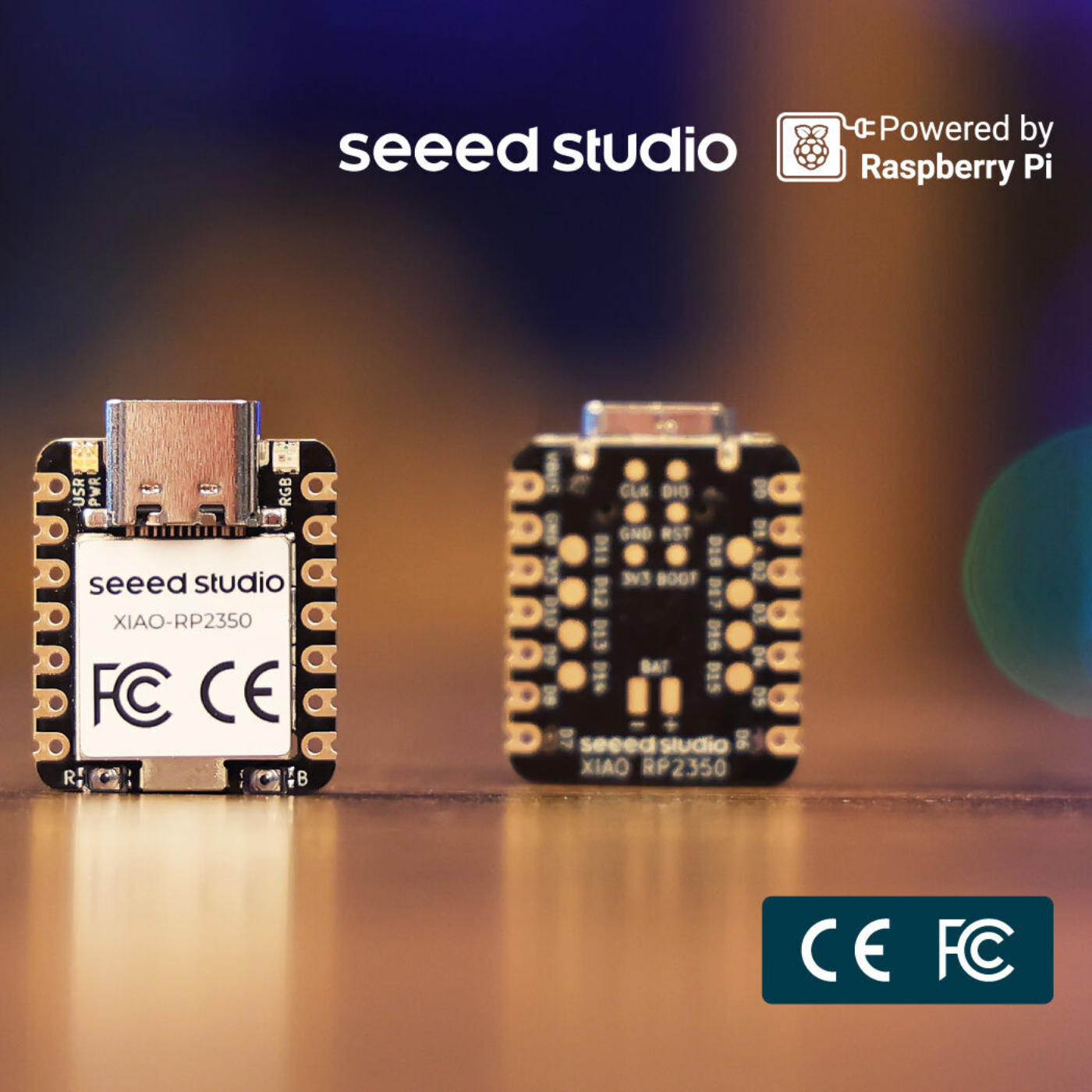
Front View

Back View

Applications:
- Smart Control
- Human Interface Devices (HID, such as mouse, DIY Mechanical Keyboard, joystick, console)
- Education
- Robotics
- Wearables
Reviews
There are no reviews yet.