Description
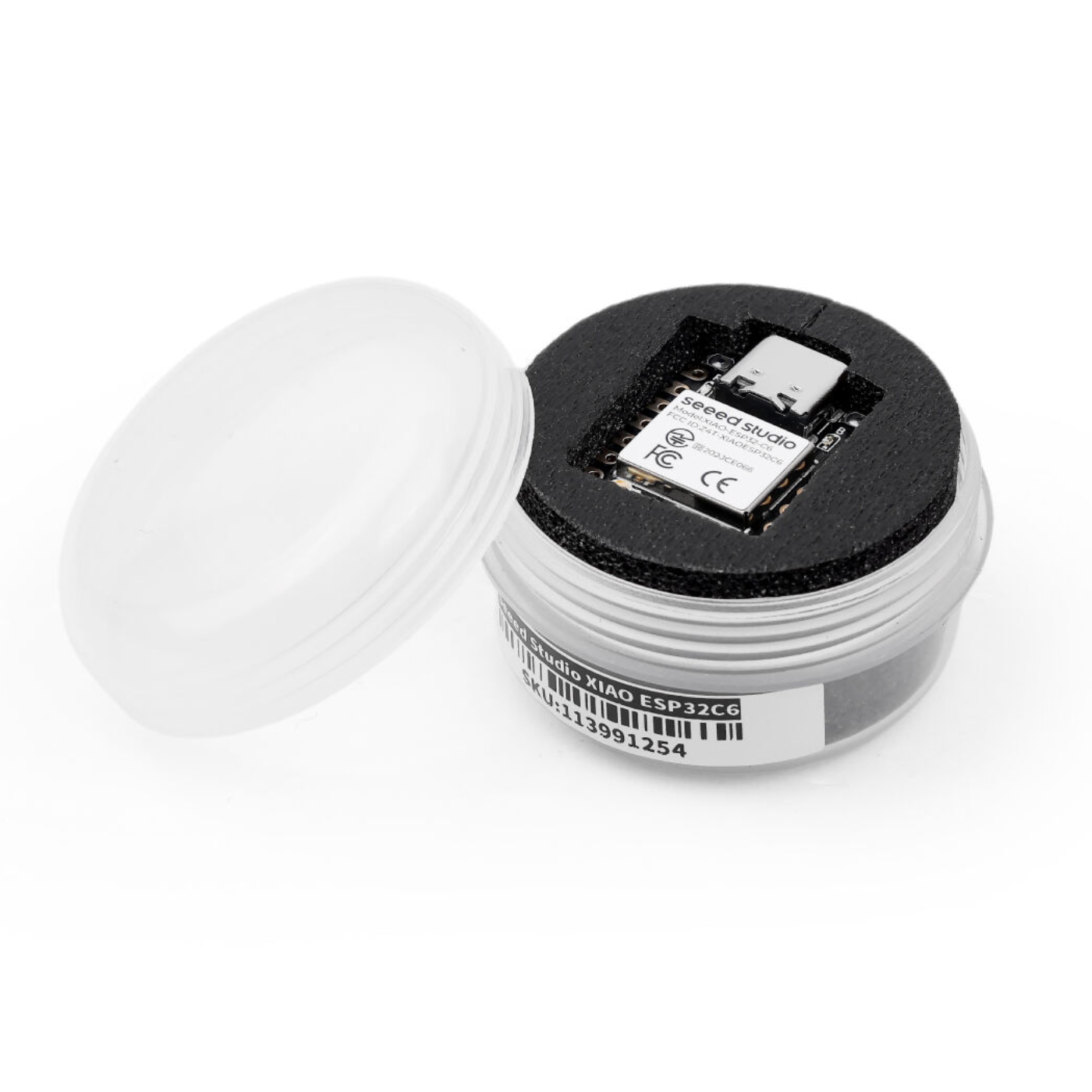
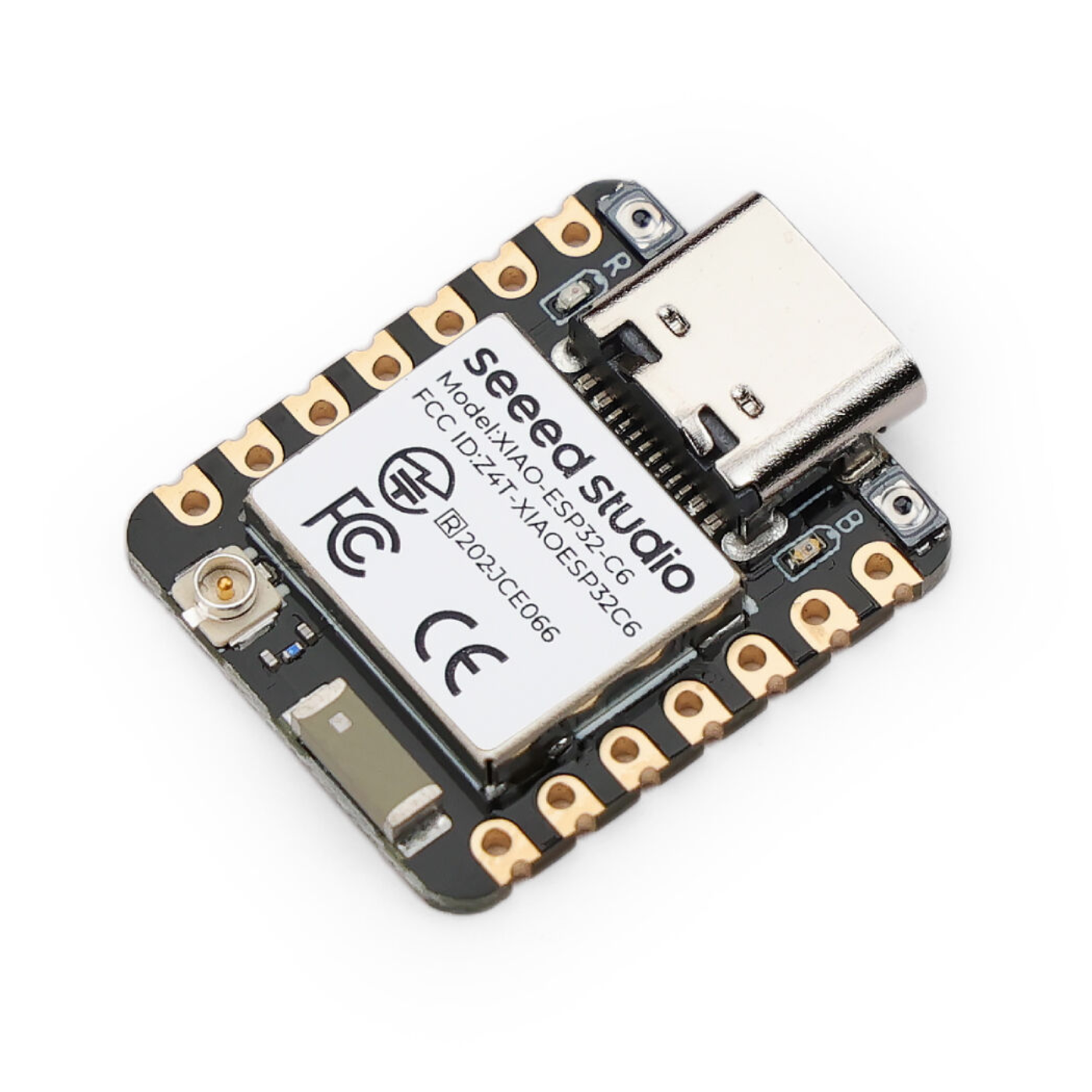
Seeed Studio XIAO ESP32-C6 Development Board
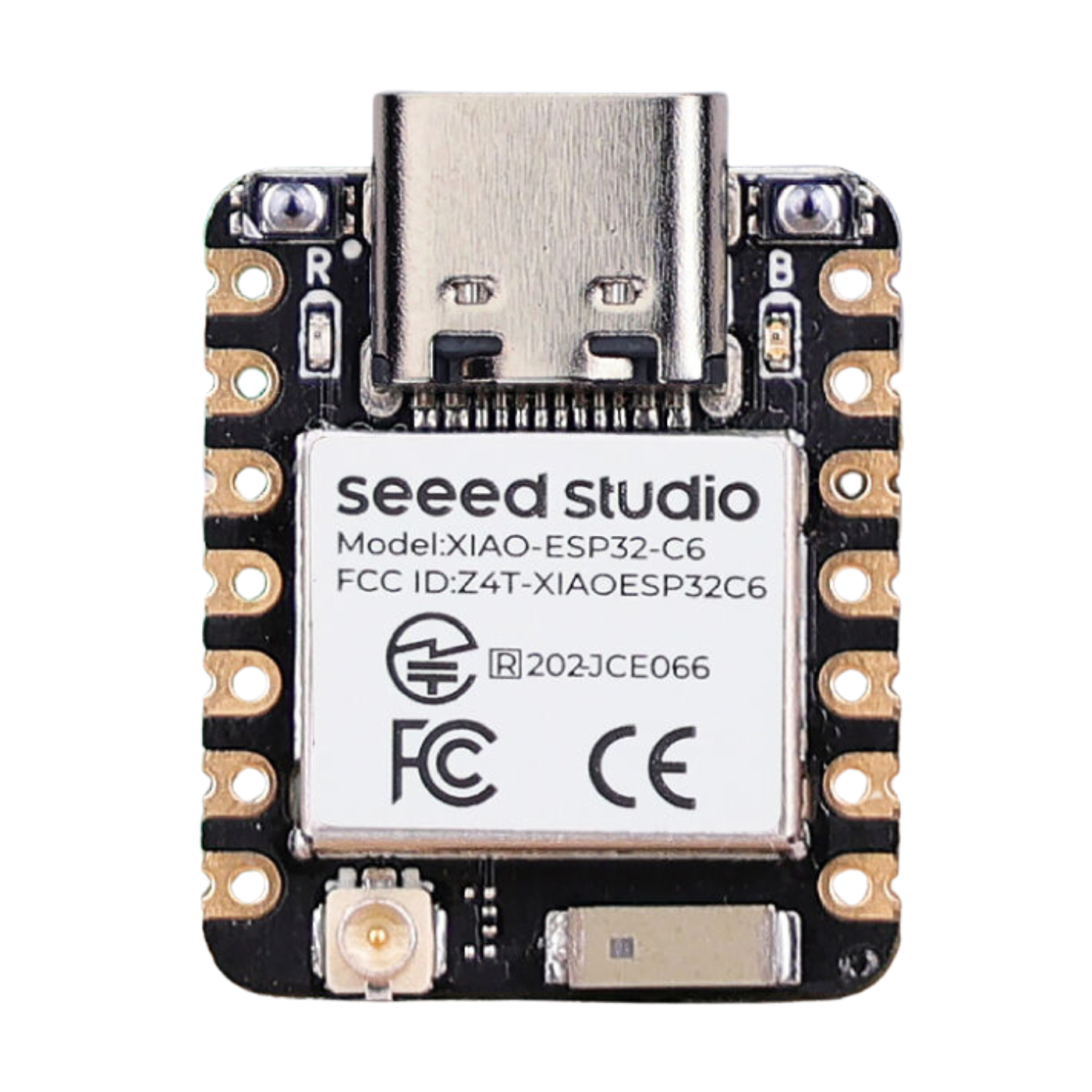
The Seeed Studio XIAO ESP32-C6 development board is a powerful yet compact solution for modern IoT and smart home projects.
Built on Espressif’s ESP32-C6 MCU, it supports advanced wireless connectivity including Wi-Fi 6, Bluetooth 5.0, Zigbee, and Thread, making it highly versatile for Matter-compliant applications.
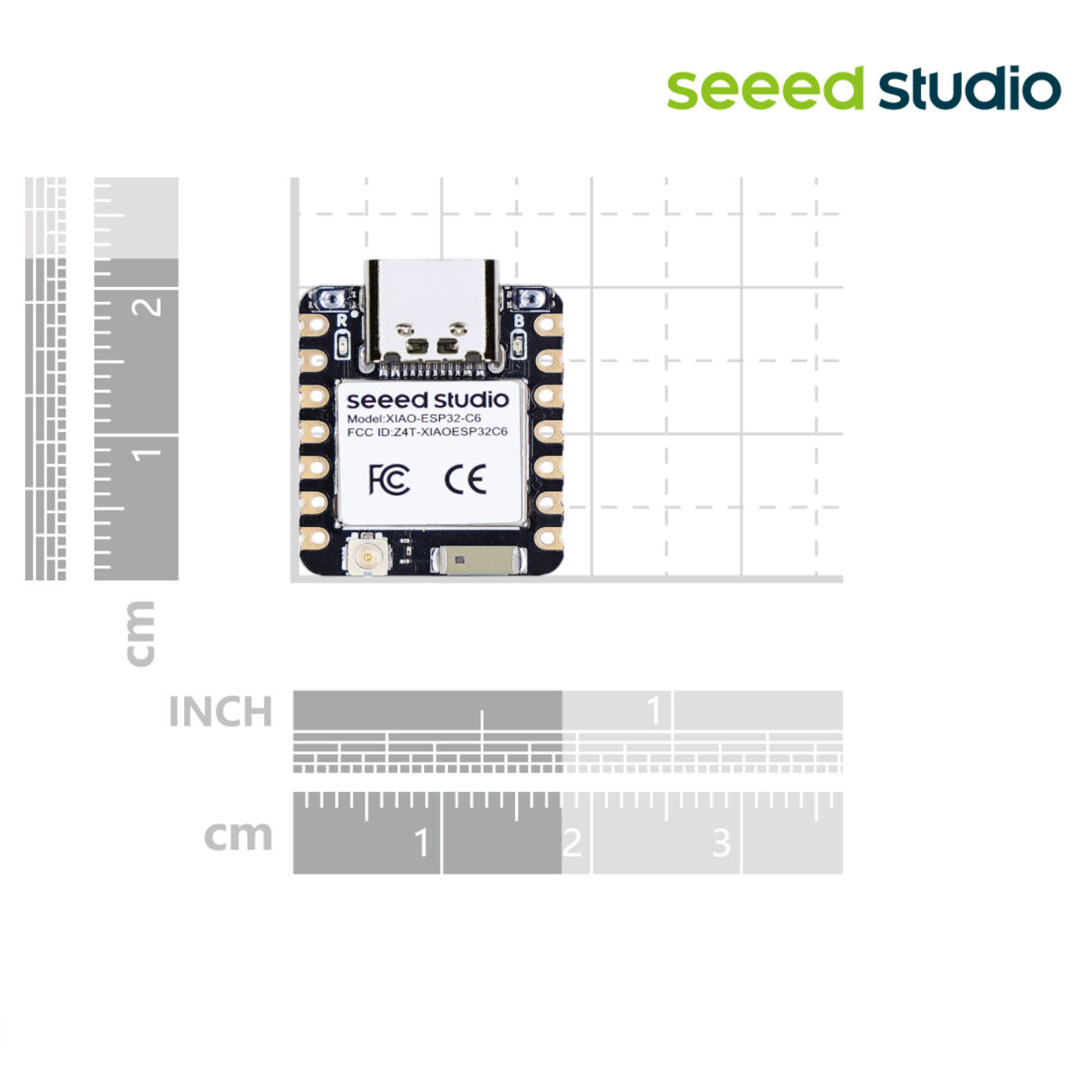
With its thumb-sized footprint and single-sided mount design, the board is ideal for space-constrained projects while still delivering strong performance.
Integrated chip-level encryption ensures secure operation, while seamless compatibility with popular IoT cloud platforms enables developers to bring products to market faster.
This ESP32 development board is a reliable choice for innovators looking to create next-generation connected devices.
Features:

- Enhanced Connectivity: Includes 2.4GHz Wi-Fi 6 (802.11ax), Bluetooth 5 (LE), and IEEE 802.15.4 radio connectivity, allowing you to use the Thread and Zigbee protocols.
- Matter Native: Supports constructing Matter-compliant smart home projects through better connection and interoperability.
- Security Encrypted on Chip: Powered by ESP32-C6, it delivers increased encrypted-on-chip security to your smart home projects through secure boot, encryption, and Trusted Execution Environment (TEE).
- Outstanding radiofrequency performance: Has an on-board antenna with up to 80m of BLE/Wi-Fi range, while reserving an interface for external UFL antenna.
- Power Consumption: Offers four working modes, including deep sleep mode at 15 μA, and supports lithium battery charge management.
- Dual RISC-V Processors: Includes two 32-bit RISC-V processors, the high-performance CPU running up to 160 MHz, and the low-power processor clocking up to 20 MHz.
- Classic XIAO Designs: Retains the classic XIAO designs of the thumb-size form factor of 21 x 17.8mm and single-sided mount, making it ideal for space-limited projects such as wearables.
- Integration with popular cloud platforms: ESP Rain Maker, AWS IoT, Microsoft Azure, and Google Cloud.
IoT Protocol Comparison: Wi-Fi 6 vs Zigbee vs Thread
| Protocol | Frequency / Band | Network Topology | Typical Data Rate / Throughput | Power Consumption | Best For |
|---|---|---|---|---|---|
| Wi-Fi 6 | 2.4 GHz / 5 GHz (depending on chipset) or Wi-Fi 6 variants | Star (via Access Point / Router) | High throughput — suitable for video, audio, large data streams | High (always-on / power-hungry) | Cameras, streaming devices, high-data IoT devices, home automation hubs |
| Zigbee | 2.4 GHz (and region-dependent lower bands in some areas) | Mesh / Star / Tree | ~250 kbps | Low — good for battery or low-power devices | Sensors, smart lights/plugs, simple home automation, battery-powered devices |
| Thread | 2.4 GHz (IEEE 802.15.4 basis) | Mesh (self-healing, decentralized) | ~250 kbps (for control/data packets) | Very low — optimized for battery devices and long battery life | Smart home sensors, automation devices, low-power IoT, interoperable ecosystems |
Related Products & Smart-Home Accessories
- Seeed Studio XIAO Boards & Modules Collection
- Jetson Nano & Edge-AI Boards Collection
- IoT Sensors & Sensor Modules Collection
- Wi-Fi / Wireless Modules & Accessories
- General Electronic Components Collection
The Future of IoT Connectivity
As smart home and IoT ecosystems evolve, protocols like Thread, with low-power, mesh-networking and IP compatibility, are expected to gain traction. Thread’s IPv6-based design enables direct integration with internet and cloud services, making it ideal for seamless device communication and interoperability.
Wi-Fi 6 remains important for data-heavy devices such as cameras, smart displays or edge-AI modules that need high throughput and constant connectivity. As Wi-Fi 6 routers proliferate, IoT devices leveraging Wi-Fi will benefit from higher speeds and better management of multiple connected devices simultaneously.
In many real-world smart home deployments, a combination of protocols will coexist — low-power sensors on Thread or Zigbee mesh, and high-bandwidth devices on Wi-Fi 6. This hybrid approach harnesses the strengths of each protocol and enables a resilient, scalable, and interoperable IoT network.
Applications:
- Secure and connected smart home that improves everyday living with automation, remote control, and more.
- Space-limited and battery-powered wearables, thanks to their small size and low power consumption
- Wireless IoT scenarios enable speedy, reliable data delivery.
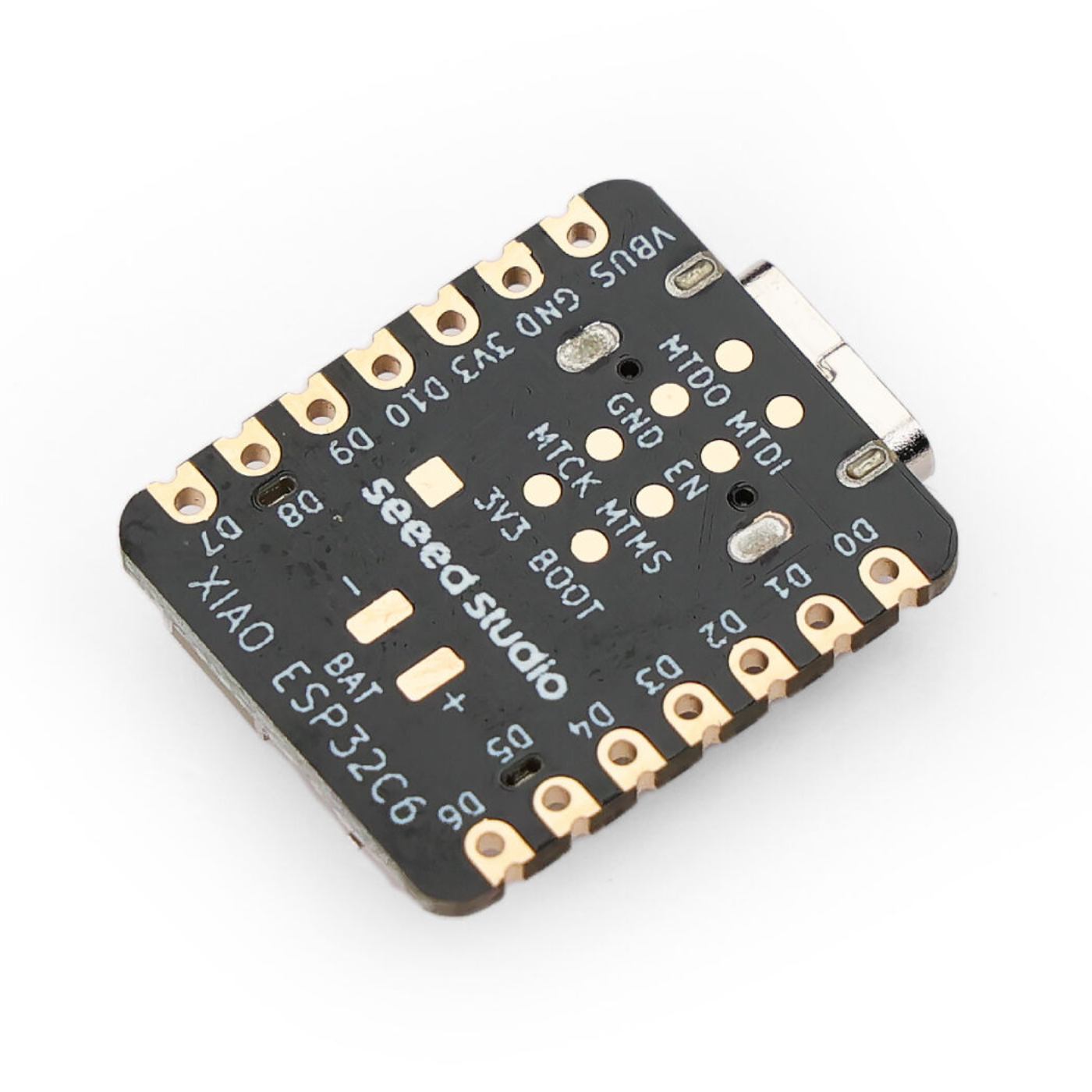
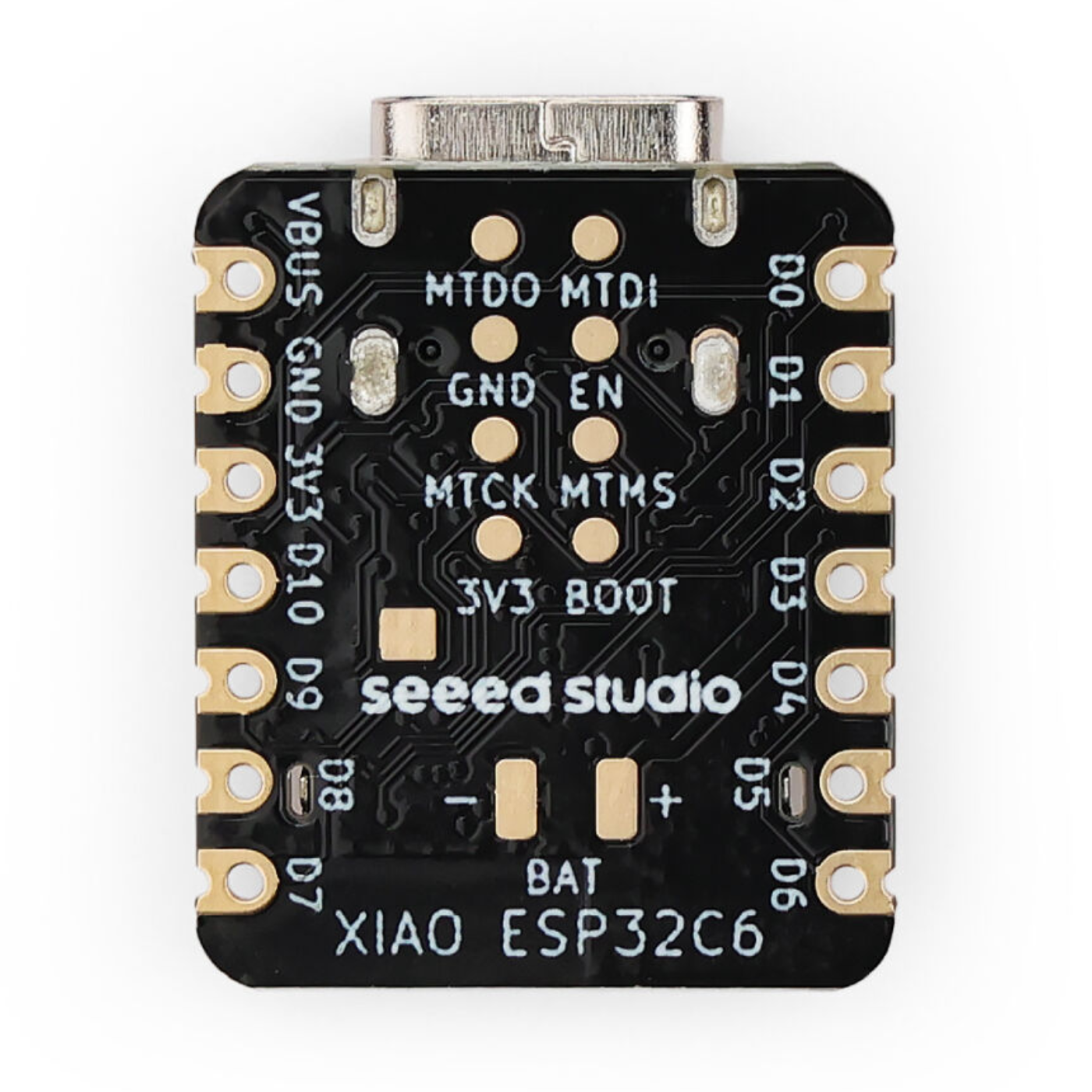
Seeed Studio XIAO ESP32-C6 Development Board Pinout Diagram

Reviews
There are no reviews yet.